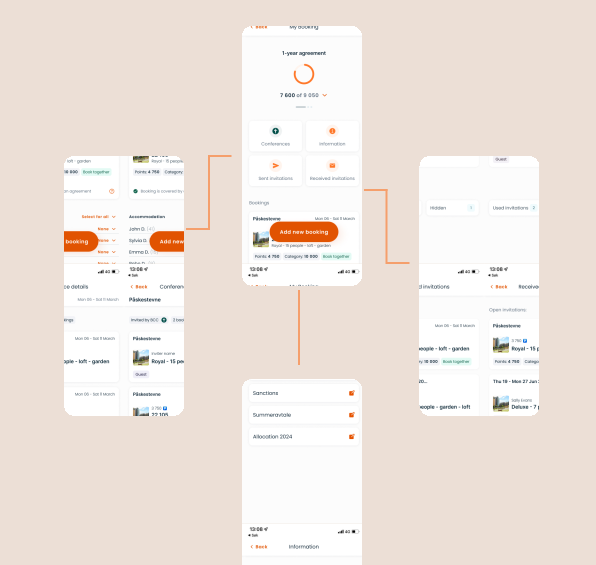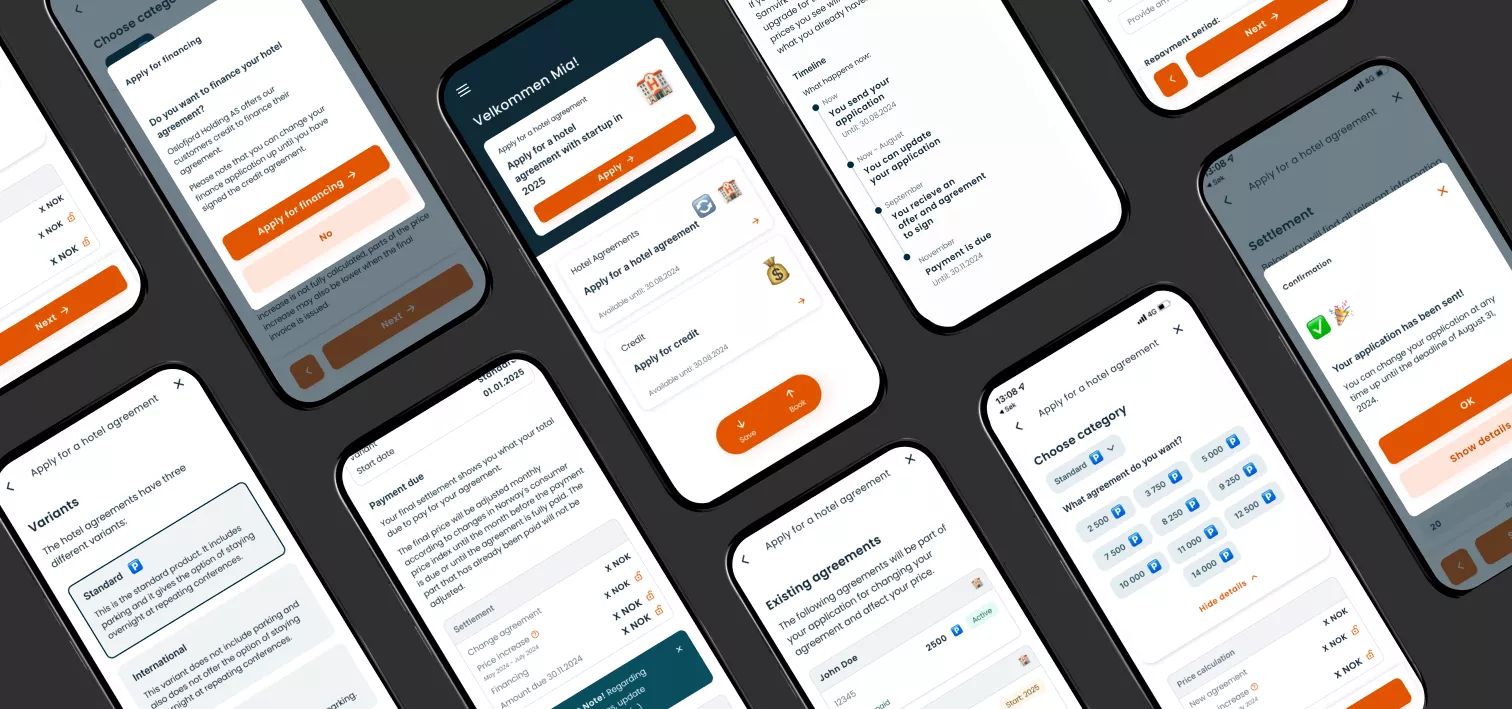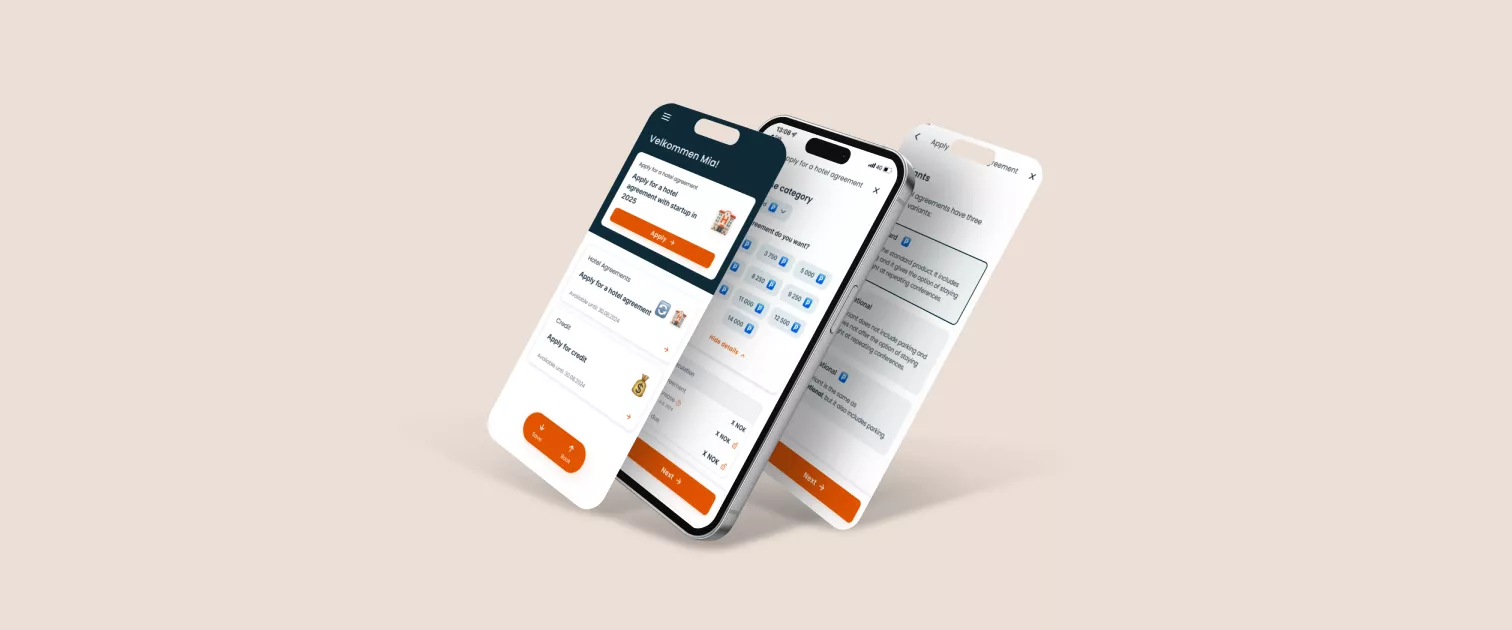
MySamvirk app’s goal is to facilitate the membership management and booking process for Samvirk members. Through the app, members can register for membership, book accommodations, manage their Hotel Agreements so they can take part in community events. From this case study you will learn how we reduced complexity by using progressive disclosure approach.
UX Research
UX Design
User testing
UI Design
Event organization
Booking management
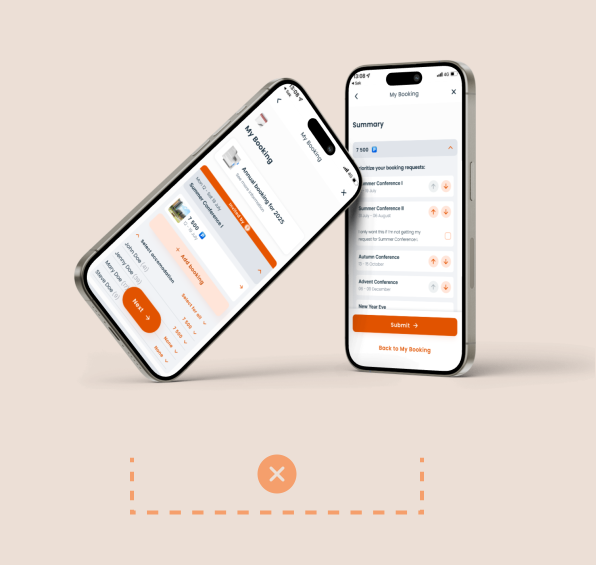
In the fall of 2024, we had areas in the application that were problematic for our users and generated a lot of help desk queries.
Booking process
The main problem was the need to send a summary of their reservations, many users did not do it in time which caused a lot of work in the customer service department
Inviting and accepting booking invitations
The current solution was designed without proper research and causes many support queries
Rocksoft's role in this project is UX/UI design.
Conduct user research that will help us to define pain points in mentioned features.
Reuse current backend logic as much as possible due to budget and time limitation.
Reduce support queries regarding booking process and booking invitations.
We asked our users about their experience with problematic features and translated gathered insights into user journeys.
Analysis of the collected information allowed us to start sketching potential solutions using wireframes.
We invited dev team early in the process to achieve our objective regarding technical limitation.
Selected solutions were tested with users, which allowed to choose the most optimal solution.
After few iteration of ideation & validation final solution was improved and translated into final designs using internal design system
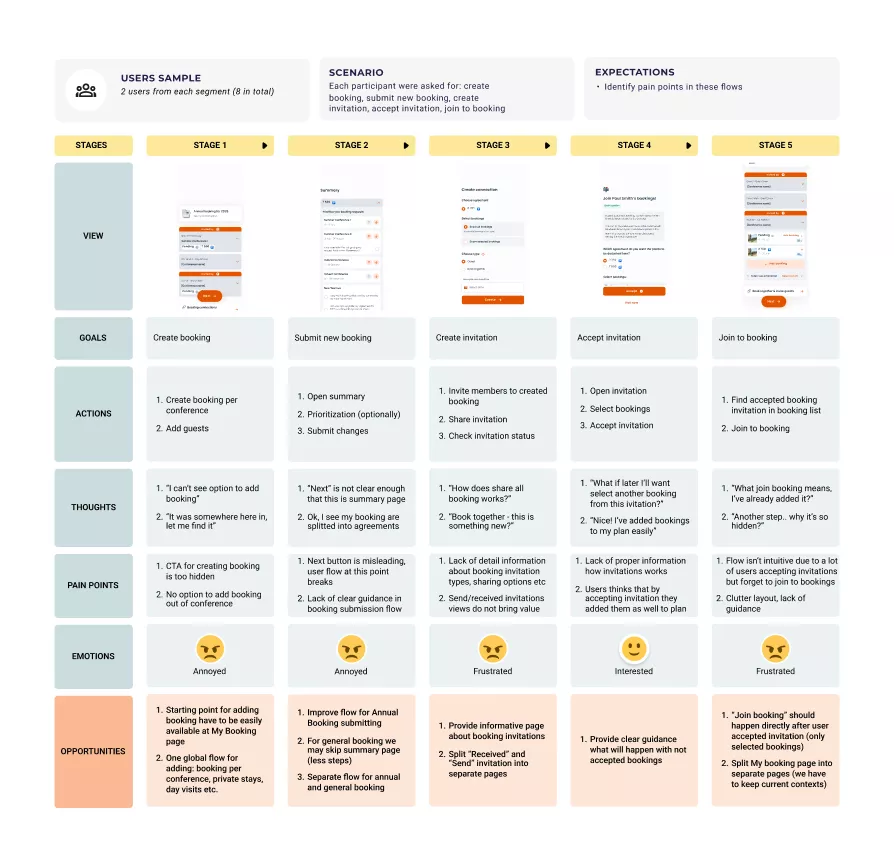
To avoid expensive guesswork and provide outcome that will serve our user we conducted research using methods:
We set out to improve the booking experience while keeping the implementation efficient. Through user research and iteration, we focused on the most impactful changes.
What we focused on
The “My Booking” page was cluttered, so we simplified it. We created a clearer flow for adding bookings, split received and sent invitations, and redesigned the invitation acceptance process.
How we solved it
We tested multiple solutions, iterated based on user feedback, and reused existing logic to streamline development. Despite tight deadlines, we delivered (just about) on time.
Key learnings
Early validation reduced guesswork and sped up development. Prioritization over complexity improved usability. Involving developers early helped refine ideas and avoid technical roadblocks.