
Handing your software to an outside team can feel like a big step, so it helps to know that you are far from alone.
In Deloitte's Global Outsourcing Survey 2024, which asked more than 500 executives around the world, 80% said they plan to keep or increase their investment in outsourcing.
The reasons have changed, too. Cost is still on the list, but access to skilled people and the ability to move quickly now sit beside it as key reasons. So software development outsourcing is no longer about finding the lowest price. It is about finding a team that builds well with you.
That makes the useful question a different one: what exactly do you hand over, and what should stay with you? This article answers both, and shows what a normal week looks like once the project is running.
What outsourcing software development actually means
Outsourcing software development means that instead of hiring your own developers, you work with an external team that designs, builds and tests your software, and can keep it running afterwards. You keep the idea and the ownership of the product, while the team brings the people, the tools and the day-to-day technical experience. It works like hiring an architect and a building crew instead of learning to lay bricks yourself. You could probably learn, but your time is better spent elsewhere.
What you hand over
The part that moves to the team is the craft of turning an idea into working software. In practice that includes:
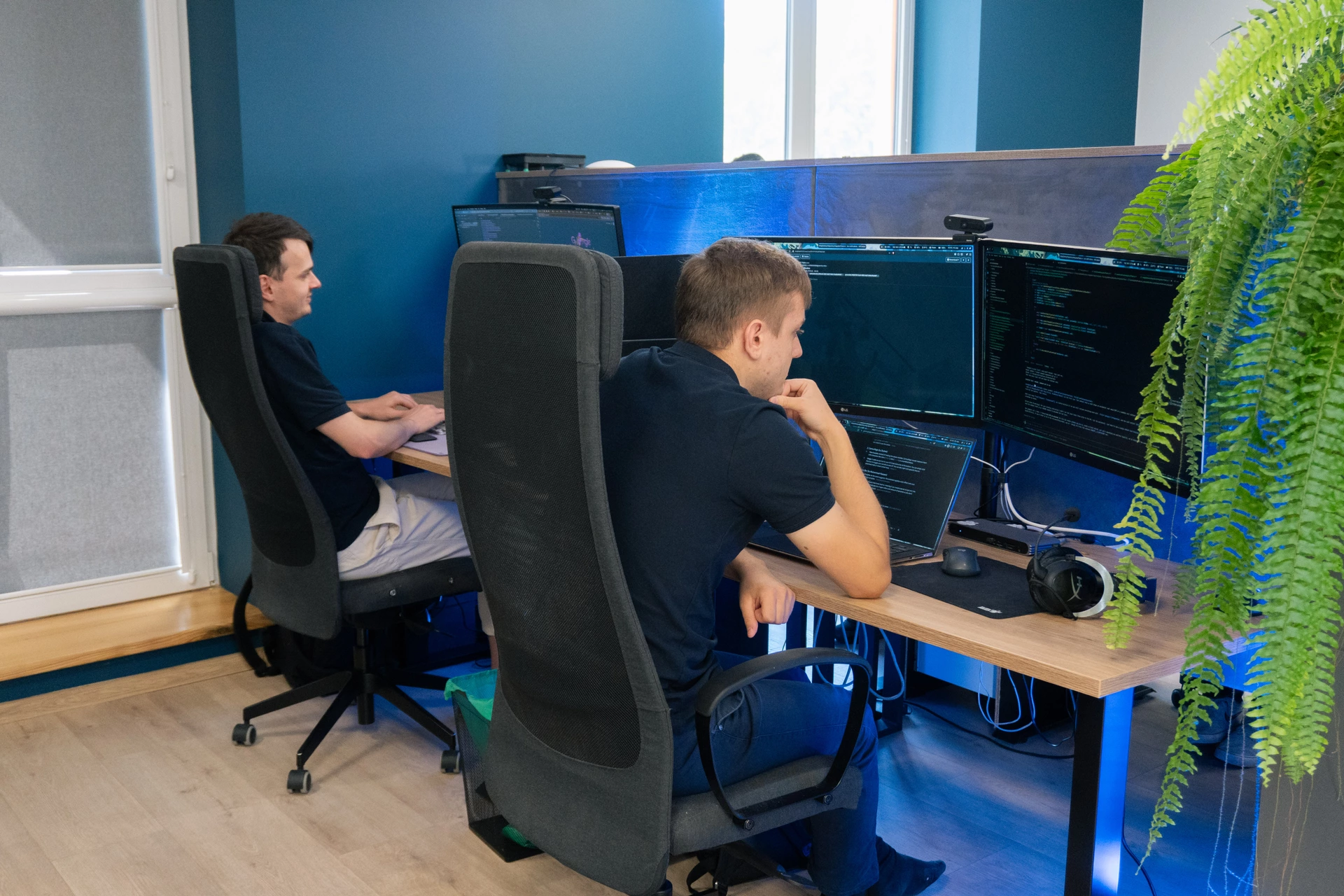
designing how the product works and looks, from the structure of the screens to the way a user moves through them
writing and reviewing the code
testing everything before it reaches your users
setting up the technical environments the product runs in
fixing what breaks and keeping the software up to date once it is live (we explain what that covers in What 'software maintenance' actually means for your business)
Most founders are happy to let this part go. You do not have to recruit developers, run technical interviews or keep up with which tools are in fashion this year. The team takes care of the how, and you can spend your energy on the business the software is meant to serve.
Where AI fits in
AI is part of this craft now, too. In the same Deloitte survey, 83% of executives reported that AI is already being used as part of outsourced services, and in practice it helps a good team move faster, from first drafts of screens to routine documentation. What it does not replace is judgment. At Rocksoft a person still makes the decisions and AI is a tool in their hands, so it is worth asking any partner how they use it and who checks the result.
What's worth keeping close
Handing over the work does not mean handing over the steering wheel. The projects that go best are usually the ones where the founder stays involved in four specific things.
1. The reason the product exists
A good team will question your assumptions and sharpen your idea, which is a big part of their value, but who the product is for and what it needs to achieve has to come from you.
2. Priorities
Every project has more good ideas than budget, so someone on your side needs to be able to say what goes into the first version and what can wait.
3. Speed of answers
A question sent on Monday and still unanswered on Thursday means a developer is either waiting or guessing, and both cost time. A clear reply within a day or two keeps everything moving.
4. Ownership of what gets built
It is worth agreeing early, with any partner, that the code, the accounts and the documentation live in your name, so that you always have full access to your own product.
What software development outsourcing looks like week to week
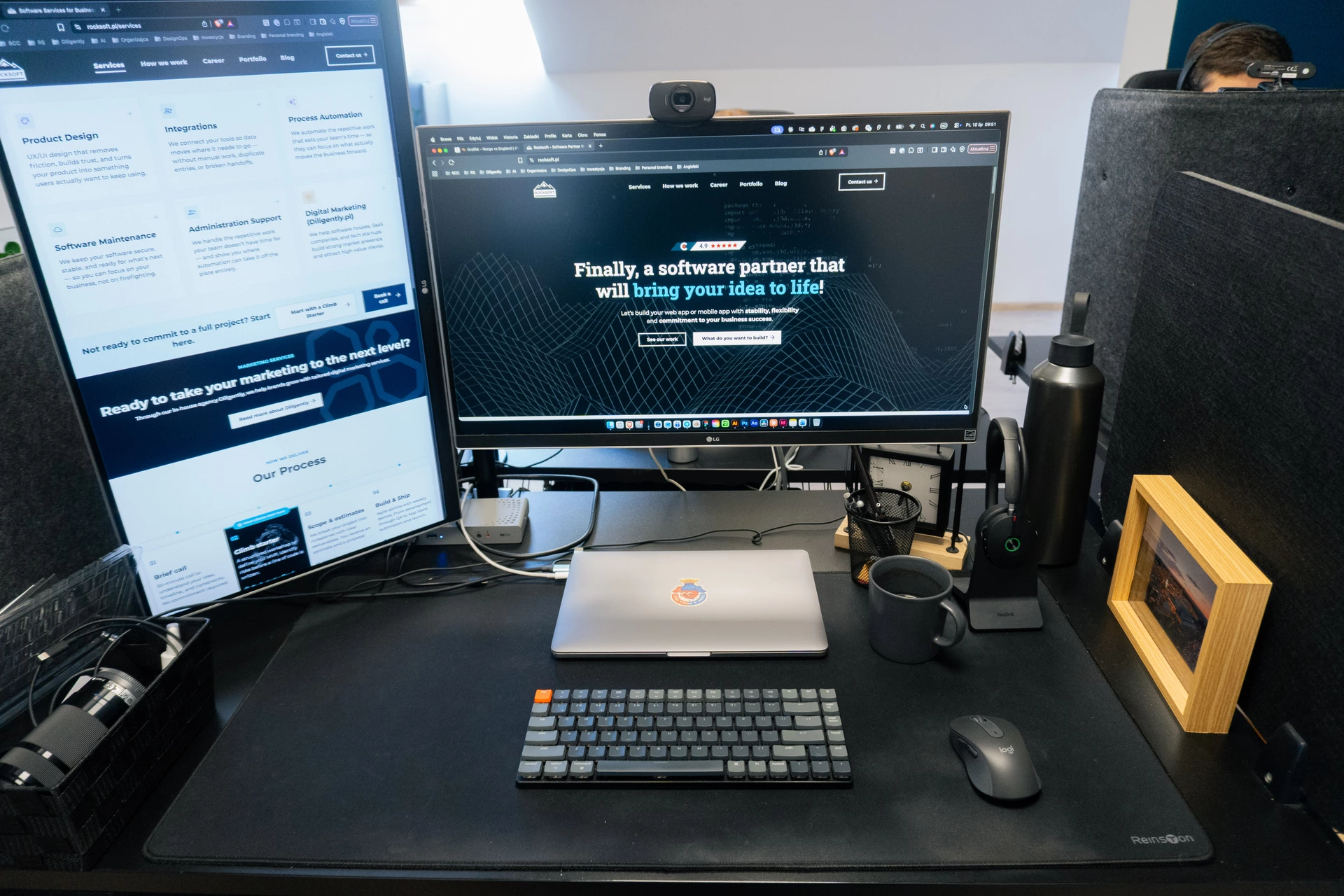
At Rocksoft the start follows a simple path. A Key Account Manager is your first guide, and together you work out who your main contact is and what the project needs. A custom proposal with scope, timeline and cost follows. Once it is agreed and the contract is signed, an introductory meeting sets up the project plan and the way you will communicate.
After that, the week has a steady rhythm. The team works in short cycles and you see progress as it happens. On your side there are questions to answer, things to review and decisions to make about what comes next.
At Rocksoft the idea behind this is proactive reporting: the team shares what is happening before you have to ask, and on time and materials projects you can see exactly what the hours are going into. We wrote more about how that works in The 'Proactive Reporting' Manifesto at Rocksoft.
The way you pay shapes the rhythm as well. A fixed price suits work with a clearly defined scope. Time and materials suits projects that keep evolving as you learn from real users. The two can also be combined when a project has a stable core and a flexible edge.
Is outsourcing the right move for you?
Software outsourcing fits well when you need skills you do not have in-house, when you want to move faster than hiring would allow, or when you would like to scale the effort up and down as the project changes. Building your own team can make more sense when the software is the core of your competitive edge and you already have the budget and experience to run it. Even then, a mix of both is very common.
The balance can also change over time. In the same Deloitte survey, 70% of executives said they had brought some previously outsourced work back in-house over the last five years, so nobody treats this as all or nothing. The setups that last are the ones that make such changes easy, with shared access and good documentation from the first day.
If you are still deciding who to work with, our article on 4 signs your IT provider will be a partner, not a contractor covers what to look for in a provider.
And if you would like to think it through with someone before you commit to anything, book a Clarity Session. It is a focused, paid 60-minute conversation with a senior Rocksoft engineer and product lead. You leave with a concrete path forward, whether that means working with us, with someone else or with your own team.